

Don’t Confuse Sample Production with Industrial Manufacturing Capability | Choosing High-Speed Doors for the Food Industry Requires Extra Care
Food-processing environments are complex.
Fresh-food processing areas often involve high humidity and frequent exposure to disinfectants; bakery workshops experience significant temperature fluctuations; cold-chain facilities face low temperatures and frost; and finished-product areas require strict control of insects and airborne dust.
Low-cost conventional doors may be able to perform basic opening and closing functions, but while they may work in the short term, long-term use can easily lead to corrosion of the door frame, aging and air leakage from sealing strips, and even mold growth on the door curtain.
Once the cleanliness level of a production area falls outside the required standard, the result can be direct food contamination and product disposal.
Many small manufacturers on the market rely on assembling components from different suppliers to produce samples.
The sample may meet the required specifications, but during mass production, some suppliers may reduce the thickness of the door curtain, replace sealing strips with lower-quality materials, or overlook food-grade material requirements.
This is the fundamental difference between “being able to make a product” and “being able to manufacture it consistently.”
Victory Door follows strict food-industry requirements from the very beginning of the material-selection process:
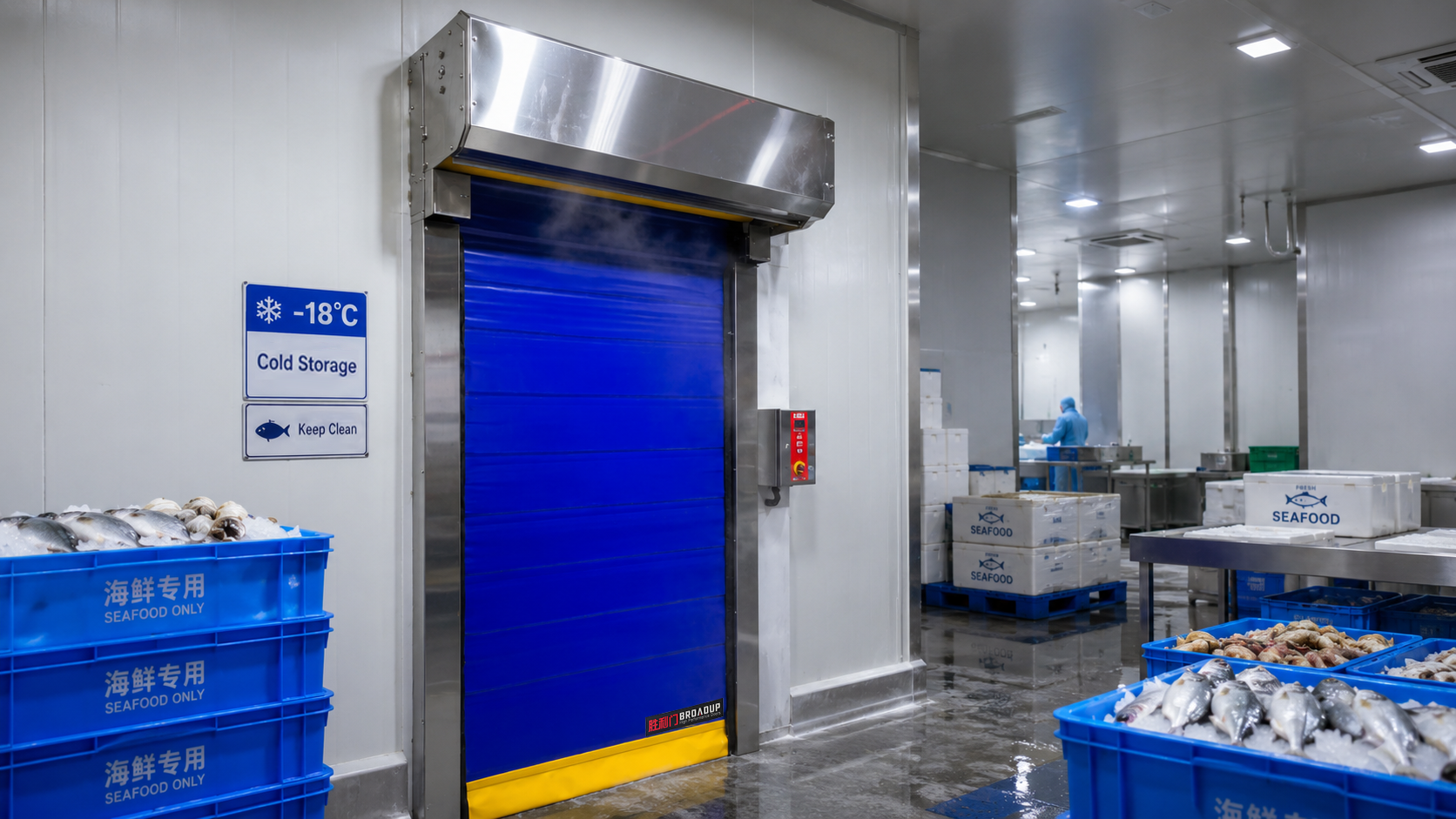
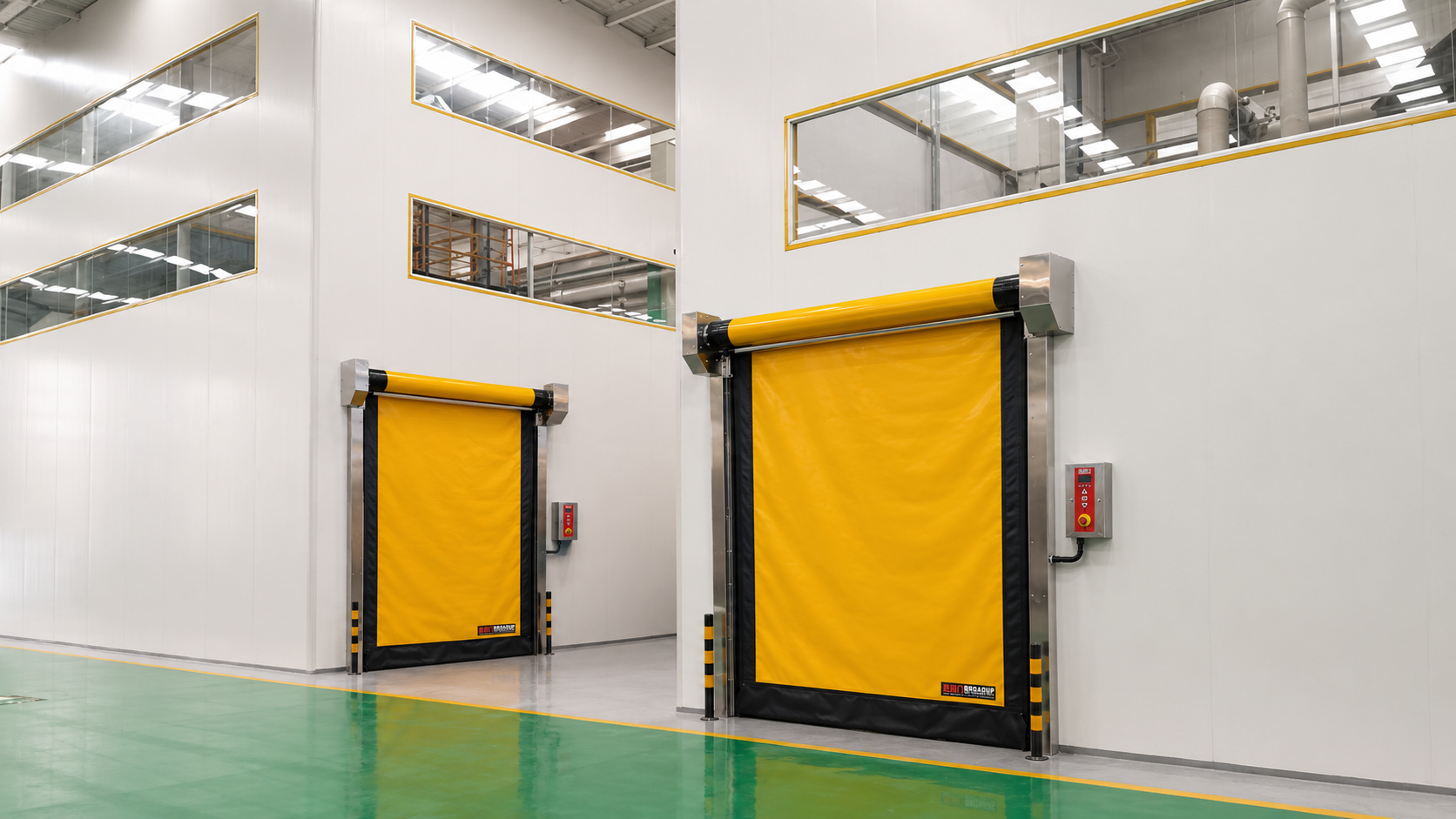
✅ 304/316 stainless steel profiles are standard options for the door frame, providing resistance to acidic and alkaline disinfectant sprays while eliminating the risk of rust particles or corrosion debris entering the production area.
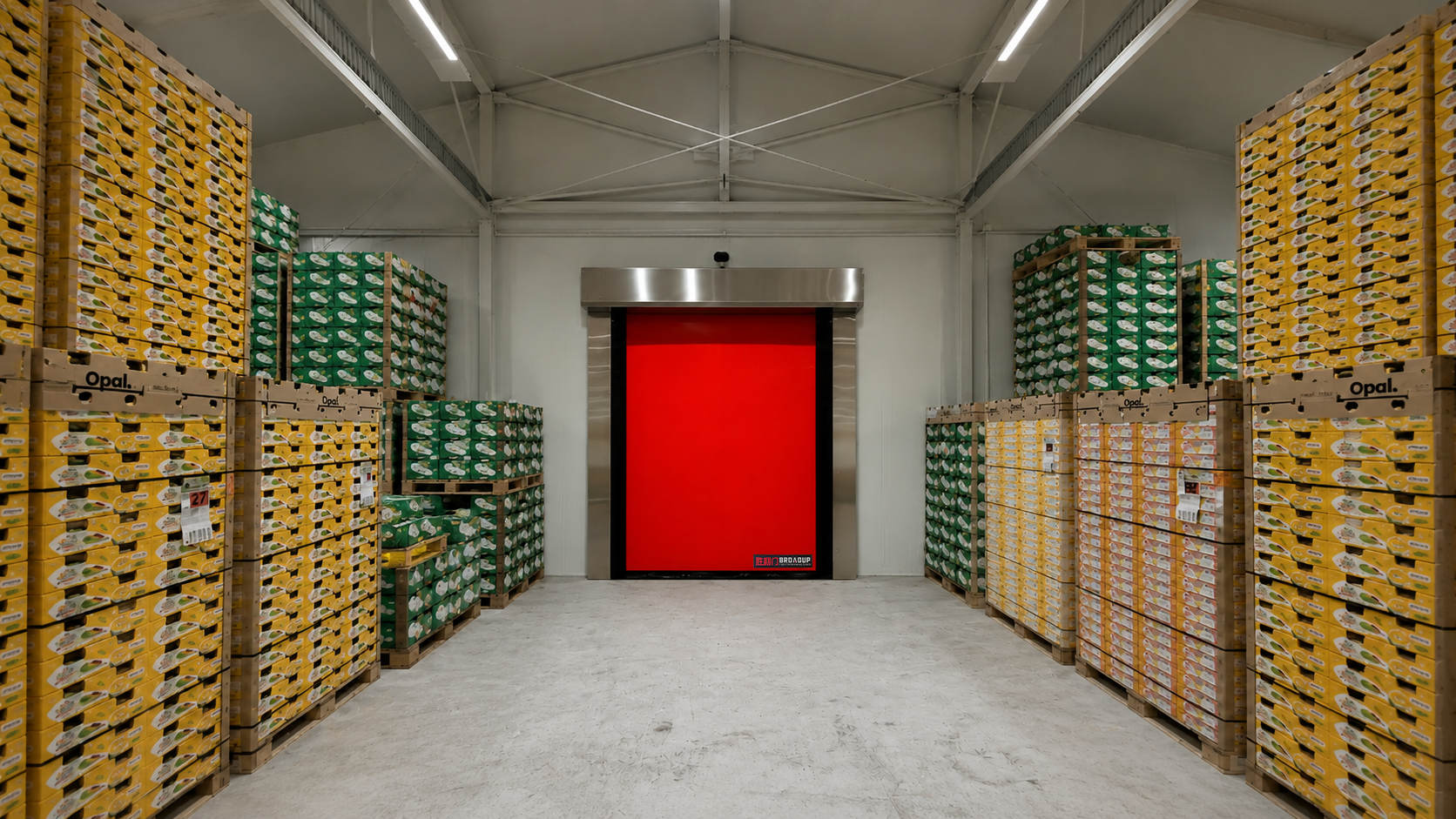
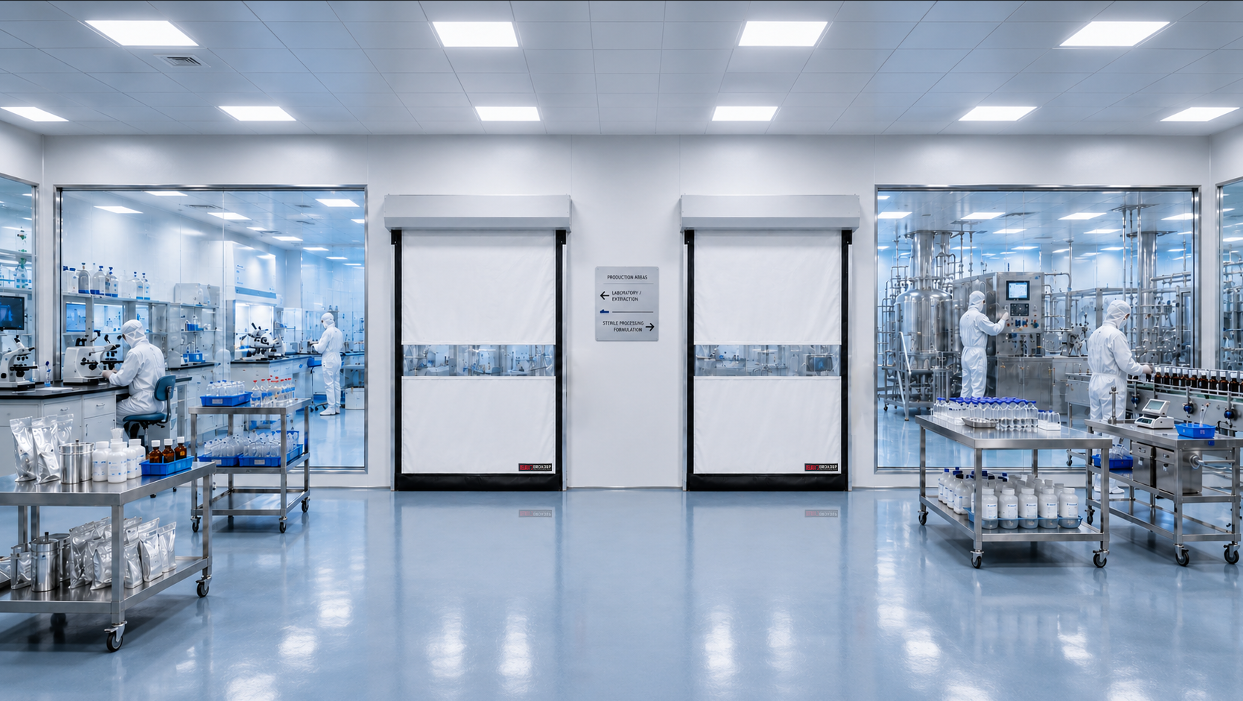
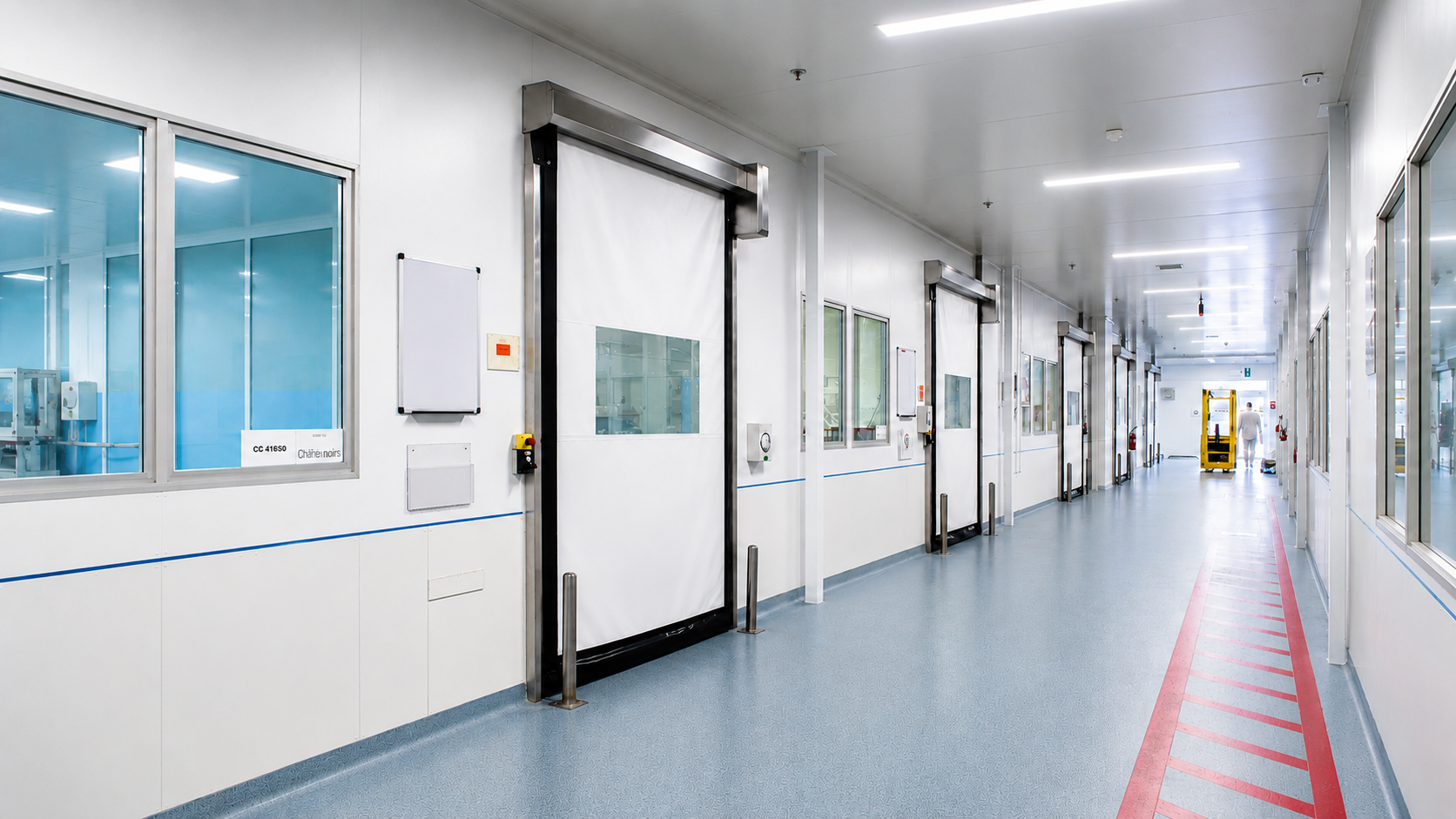
✅ The door curtain is made from food-grade antibacterial PVC material. Its dense, smooth surface minimizes areas where dust can accumulate and allows the curtain to withstand routine cleaning and disinfection procedures, meeting the material requirements of clean production environments.
✅ The sealing system uses multiple EPDM airbag seals. The bottom seal automatically adapts to uneven floor surfaces when closing, while door gaps are strictly controlled to within 3 mm. Actual testing shows an insect-blocking rate of more than 99%, effectively preventing insects and dust from entering clean production zones.
✅ Opening and closing speeds remain stable at 0.8–2.5 m/s, making the doors suitable for high-frequency forklift traffic. Rapid operation reduces the exchange of hot and cold air and helps cold-chain facilities lower energy consumption, with actual tests showing approximately a 30% reduction in temperature-control losses.
Backed by more than a decade of practical experience in food-industry projects, Victory Door avoids a one-size-fits-all approach to standardized product supply.
During on-site surveys, technical specialists develop customized solutions according to factors such as the workshop temperature zone, daily opening and closing frequency, and cleaning and disinfection frequency.
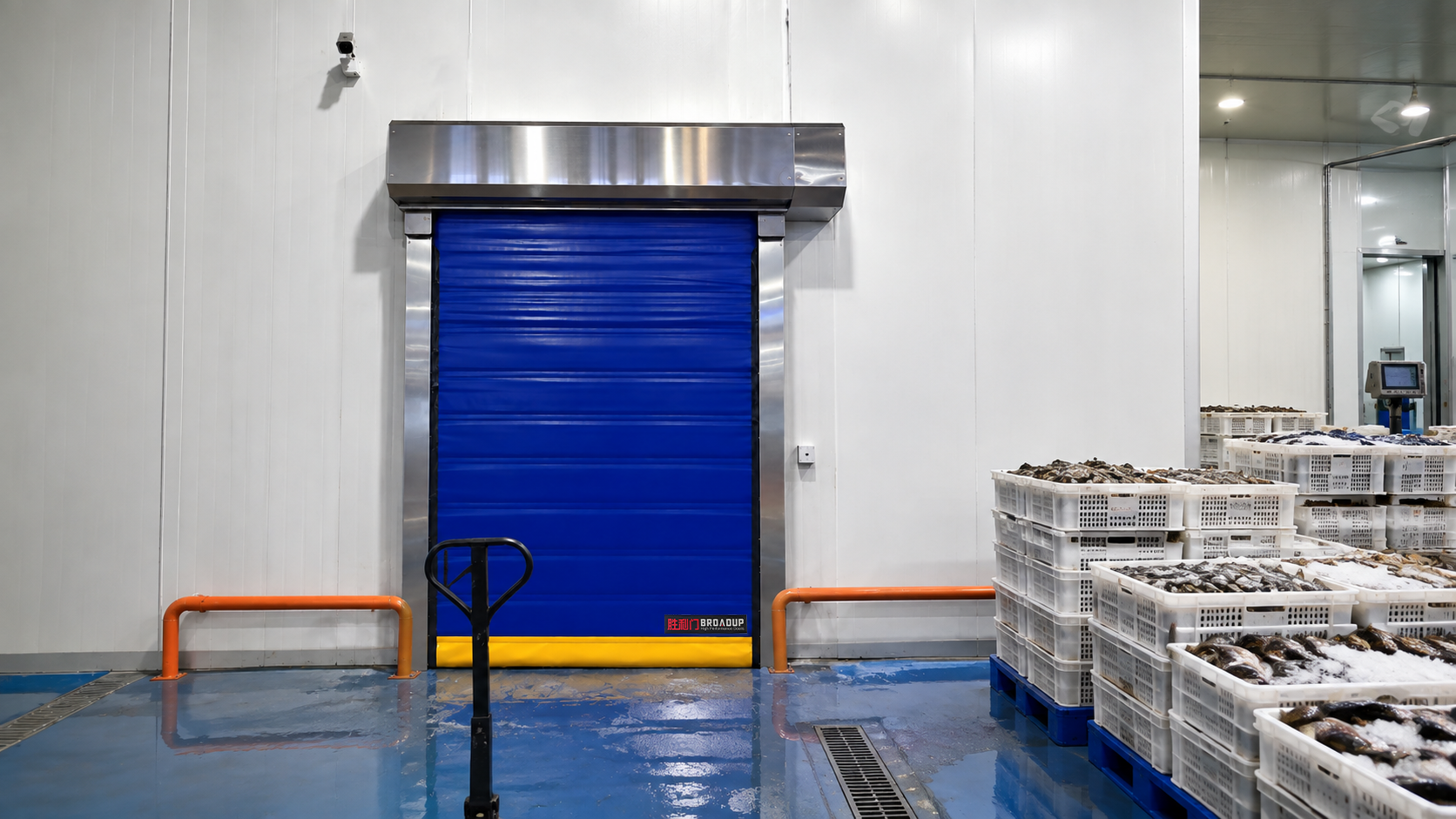
For aquatic food and pickling workshops, reinforced door structures with enhanced resistance to salt corrosion are selected.
For high-temperature bakery areas, motor cooling configurations are optimized.
For low-temperature cold-storage facilities, anti-icing heating components are added to the door tracks.
These measures help prevent incorrect product selection from the very beginning.
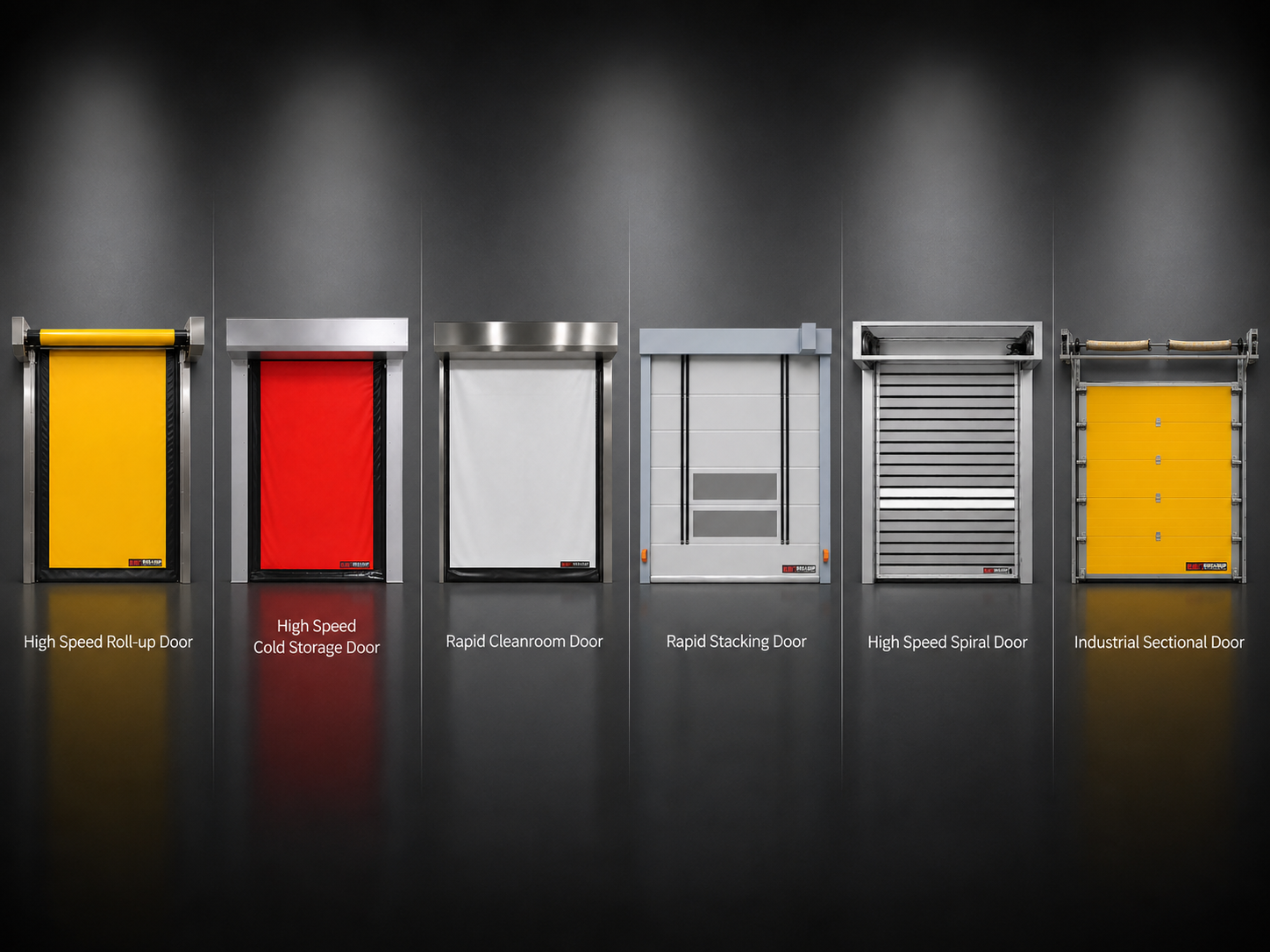
All product categories undergo 100,000-cycle opening and closing fatigue testing before entering mass production, with strict controls in place to maintain consistency across every production batch and avoid the common problem seen with some small manufacturers — “excellent samples, inferior mass-produced products.”
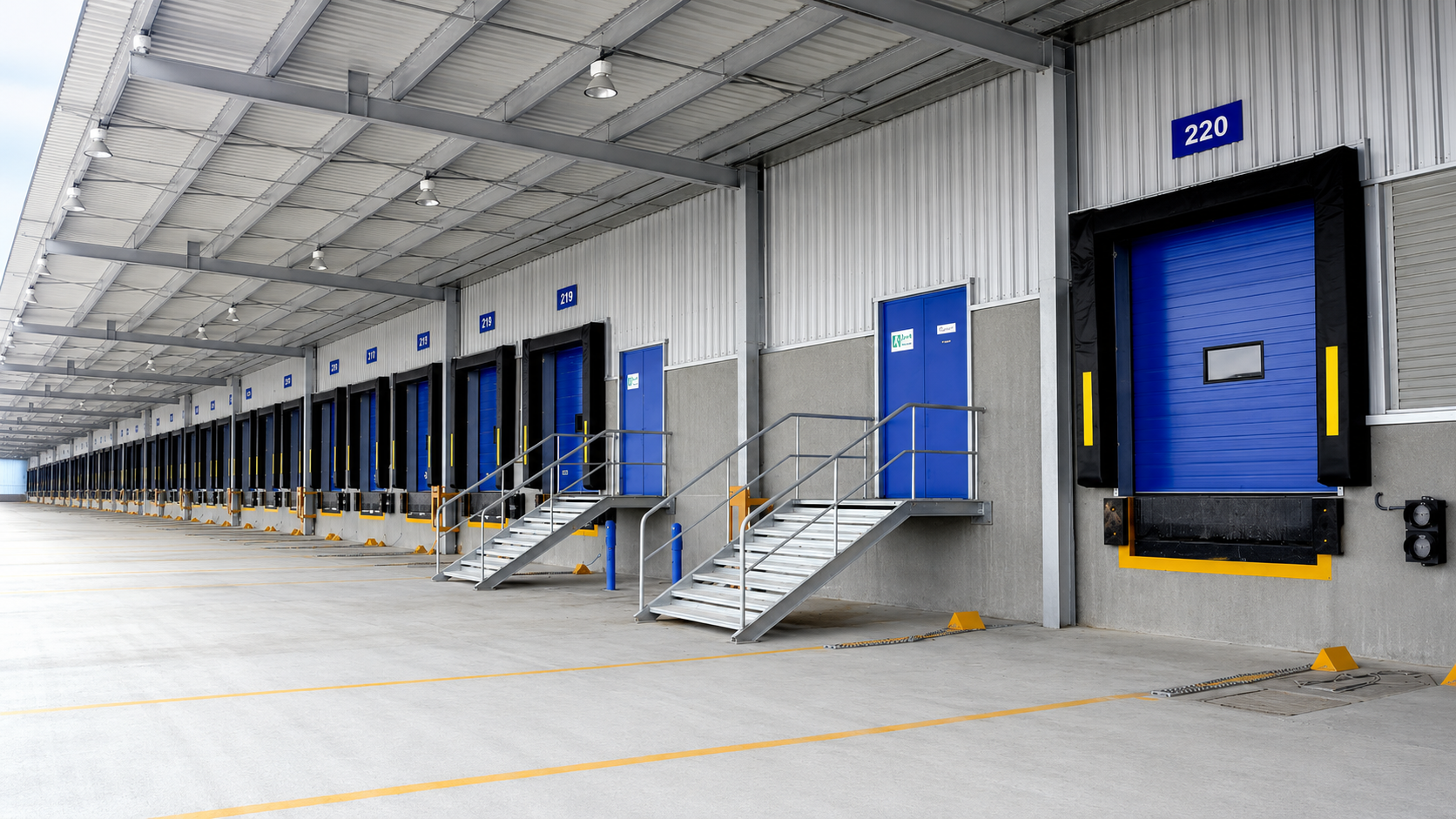
From dairy and meat-processing plants to central kitchens and prepared-food industrial parks, Victory Door high-speed doors have been installed in hundreds of food-production projects.
These real-world applications demonstrate a simple fact: a high-quality Industrial Door does not rely on an impressive sample to win an order.
Long-term reliability comes from comprehensive industrialized manufacturing control across the entire production process.
When selecting doors for food-processing facilities, businesses should not be guided solely by low-priced samples.
Priority should be given to established industrial manufacturers with deep industry experience, rigorous production processes, and extensive proven application cases.
This is essential for protecting workshop hygiene and maintaining the fundamental requirements of safe food production.