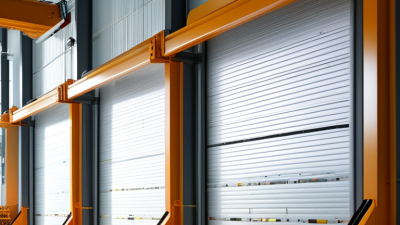
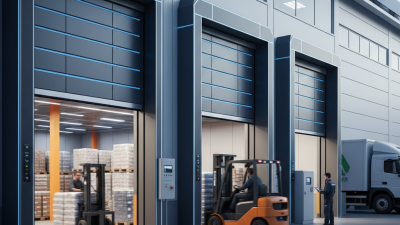
So, why would someone pick a Zipper Fast Door for their global sourcing needs? Honestly, most sourcing teams aren't just looking at how the door looks—they're checking out things like how quickly it opens, how well it seals, safety features, ease of access for maintenance, and of course, the costs involved in replacing it. A good Zipper Fast Door can really help keep traffic flowing smoothly between different areas like production lines, chilly storage rooms, and loading docks. Plus, it can cut down on dust spread and unnecessary air exchange, which is pretty important.
Michael Turner, an experienced industrial-door engineer with over twenty years in the field, puts it simply: "Choose the door that protects the process, not just the doorway." His point? A high-speed door needs to match the specific conditions—like how much traffic it handles, wind exposure, temperature ranges, and cleaning routines. For example, an indoor PVC door might work perfectly on a production line, but a warehouse might need something sturdier—like reinforced guides and curtains. The bottom line is, each site has its own needs.
When buyers are considering options, they really should look into things like cycle testing, how fast the curtain bounces back, motor quality, sensor responsiveness, and the availability of local spare parts. It’s also smart to ask for installation records and maintenance schedules—these little details can tell you a lot about whether a speed door is reliable or just looks good on paper. Sure, PVC rapid roll-up doors can perform well, but if they’re not aligned properly, they’ll wear out faster. Likewise, while a speed roll-up door saves space, it still needs proper electrical protection. And don’t forget, emergency-release procedures should be clear and easy to follow.
And here’s something that often trips people up—sometimes the lowest bid isn’t the best deal. A trustworthy supplier will always be upfront about what their product can and can’t do—that’s important. When you’re working on global projects, you’re bound to run into shipping delays, unfamiliar site conditions, and inconsistent technical support. Even a sturdy warehouse door can fail if the installation crew isn’t well-trained. That’s why it’s vital to look at the full service chain, not just the product price. In the end, this article points out those real-world factors you should consider before giving the green light on any Zipper Fast Door purchase.
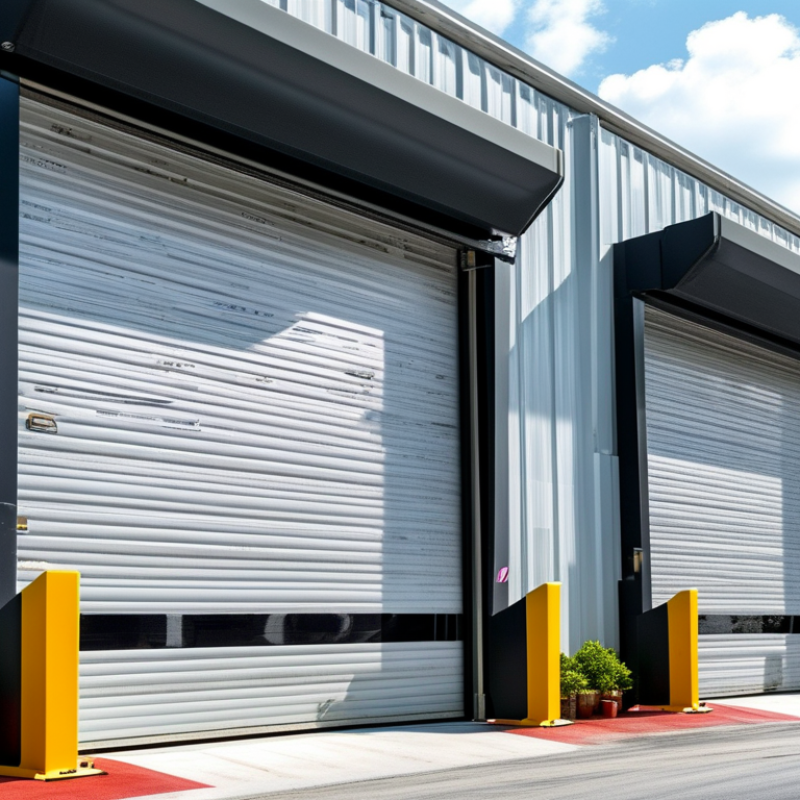
A Zipper Fast Dooris a high-speed Industrial Door designed for frequent opening and closing. It uses flexible curtain fabric and interlocking side zippers to maintain a secure seal. The zipper guides help the curtain stay aligned during daily movement.
Unlike rigid doors, this system can recover from minor impacts in some applications. It closes quickly. That matters in warehouses, cold rooms, loading areas, and clean production spaces. A fast cycle can reduce temperature loss, dust movement, and unnecessary traffic between zones. However, performance depends on the opening size, operating frequency, wind pressure, and surrounding workflow.
In global sourcing, buyers should request clear technical data before comparing prices. Check curtain thickness, motor duty rating, control response, safety sensors, zipper material, and repair access. Installation conditions matter too. A suitable Zipper Fast Door may still perform poorly if the floor is uneven or the frame is inaccurately measured. This detail is easy to underestimate.
From practical facility assessments, maintenance access often affects long-term reliability more than the initial purchase cost. Ask for spare-part availability, operating instructions, test records, and support arrangements in the destination market. Local electrical and workplace requirements should also be verified by qualified professionals. The door is not a cure-all. It may reduce operational losses, but it cannot correct poor traffic planning or neglected maintenance.
A zipper fast door is a high-speed door with a flexible curtain guided by side zippers. The zipper system helps keep the curtain aligned during operation and allows many models to reset after accidental impact, making this door type suitable for warehouses, factories, cold rooms, and other high-traffic areas.
The chart shows representative opening-speed values commonly specified for each door category. Actual performance varies according to door size, control system, wind conditions, installation, and product configuration.
A Pvc Zipper Fast Door uses a flexible curtain, side guides, a drive motor, and safety sensors. The curtain rises vertically when a vehicle, worker, or control signal activates the system. Its zipper edges lock into specially shaped tracks, keeping the opening sealed during movement. This design helps the curtain resist moderate wind pressure and accidental contact.
When the door closes, a bottom bar travels downward and stops if it detects an obstruction. Many systems also include photoelectric sensors and manual release devices. The U.S. Department of Energy reports that air leakage can account for 20% to 30% of building heating and cooling energy use. A fast-closing door can reduce exposure time between indoor and outdoor areas. Small details matter.
Grand View Research has estimated steady growth in the global high-speed doors market, supported by demand for energy efficiency and cleaner industrial environments. However, speed alone does not prove performance. Poorly aligned tracks, damaged zippers, or incorrect sensor settings can create repeated faults. Field inspections often find the curtain is not the real weakness; maintenance is. The honest caveat is simple. A fast door still needs suitable sizing, trained installation, and regular testing. In humid or dusty facilities, operators should inspect the zipper teeth and bottom seal more frequently.
Why Choose Zipper Fast Door for Global Sourcing?
Key Features of Zipper Fast Doors
Zipper fast doors support demanding workflows in warehouses, food facilities, and clean production areas. Their flexible curtain moves quickly, reducing the time an opening remains exposed. This helps limit dust, insects, drafts, and temperature swings between adjacent zones. The zipper edges guide the curtain back into position after minor impact. That feature matters during busy forklift traffic. It can reduce unscheduled repairs, although no door is damage-proof.
Energy control is another practical advantage. The International Energy Agency reported that buildings consumed about 30% of global final energy in 2022. A frequently open industrial doorway can worsen that burden through air leakage. Fast opening and closing cycles help preserve conditioned air. Vision panels can improve visibility before vehicles cross the threshold. Safety sensors add another control layer. Small details matter.
For global sourcing, buyers should examine wind resistance, operating temperature, curtain material, and replacement-part availability. Stainless steel hardware suits humid or washdown environments, while reinforced PVC supports repeated daily movement. The U.S. Department of Energy identifies infiltration as a major source of building energy loss, but site conditions vary widely. This is where specifications need honest review. A fast door may perform poorly if its dimensions, traffic pattern, or maintenance plan are wrong. Check service access, control voltage, safety testing, and documented cycle ratings before purchase.
For global sourcing operations, a zipper fast door can improve movement between production, storage, and loading areas. Its flexible curtain opens quickly and closes with less manual handling. This helps reduce waiting near busy dock entrances. It also limits dust, insects, and temperature exchange between zones.
The International Energy Agency’s Energy Efficiency 2023 report states that buildings consume about 30% of global final energy. Doors cannot solve this alone. However, faster closing cycles may reduce unnecessary air exchange in climate-controlled facilities. That matters in cold storage, food processing, and high-volume warehouses. The World Bank’s 2023 Logistics Performance Index also highlights speed, reliability, and shipment handling as important logistics factors. A fast door supports these daily requirements, but layout and maintenance still decide performance. This is often underestimated.
Tips: Compare total cost, not only purchase price. Check opening speed, curtain repair methods, safety sensors, wind resistance, and spare-part availability. Ask suppliers for test standards and maintenance records. Select dimensions that match forklifts and pallet traffic. A smaller service network may create delays, even when the door itself performs well. Pilot testing is wiser than relying only on catalog figures.
Sources: International Energy Agency, Energy Efficiency 2023; World Bank, Logistics Performance Index 2023.
Selecting a China Zipper Fast Door supplier requires more than comparing catalog prices. On-site experience shows that weak specifications often create expensive installation changes. Ask for curtain thickness, zipper material, opening speed, wind resistance, cycle rating, and control-panel protection. Request test records, not only product photographs. A serious supplier should explain how the door performs in cold storage, dusty workshops, or humid loading bays.
Safety deserves measurable attention. The U.S. Bureau of Labor Statistics recorded 5,283 fatal work injuries in 2023. This figure is not specific to fast doors, but it reinforces the need for guarded controls, emergency release systems, and documented risk assessments. Check compliance with applicable standards, such as EN 13241, and verify whether testing covers the supplied configuration. The Industrial Door Safety Association also emphasizes maintenance, guarding, and operator training in high-cycle environments.
Energy performance needs careful questioning. A 2024 Grand View Research review reports continued growth in the industrial doors market, driven partly by energy-efficiency requirements. However, marketing claims can be incomplete. Ask for measured air-leakage data, insulation values, and cycle-life results. Review warranty exclusions line by line. Speak with two existing users, preferably in similar climates. A spreadsheet can still mislead. I would also inspect spare-part availability, response times, packaging quality, and remote troubleshooting procedures. A supplier may offer a lower price, yet delayed zipper replacement can stop a busy dock for hours.
| Evaluation Dimension | Reference Data and Practical Target | Documents, Tests, or Questions to Request | Why It Matters in Global Sourcing | Suggested Weight | Supplier Score (1–5) |
|---|---|---|---|---|---|
| Door Opening Size | Confirm the clear opening width and height required by the site. Common industrial applications use openings from approximately 2.0 × 2.5 m to 5.0 × 5.0 m, but the final size must be matched to traffic and building conditions. | Request approved dimensional drawings, installation tolerances, available maximum dimensions, and a site-measurement checklist. | Incorrect sizing can reduce clearance, increase air leakage, and cause installation delays or structural modifications. | 10% | _____ |
| Opening and Closing Speed | Industrial high-speed doors commonly operate at approximately 0.8–2.0 m/s, depending on curtain size, motor configuration, and safety settings. Compare measured speed rather than brochure claims alone. | Request a factory test video with a time reference, speed data under load, and the rated cycle frequency. | Higher operating speed can improve traffic flow and environmental separation, while inconsistent speed may indicate control or motor problems. | 12% | _____ |
| Wind Resistance | The required wind class depends on door width, exposure, building location, and local design requirements. Ask for a declared wind-pressure or wind-speed rating and the test method used. | Verify structural calculations, test reports, guide design, reinforcement details, and the applicable local building code. | An unsuitable wind rating can lead to curtain displacement, guide damage, water ingress, and unsafe operation. | 12% | _____ |
| Zipper and Curtain Durability | The zipper profile, curtain fabric, welds, and side guides should be evaluated together. Request cycle-test results under representative curtain size and operating conditions rather than relying on a universal cycle number. | Request material specifications, zipper construction drawings, cycle-test conditions, replacement-part pricing, and failure photographs from field installations. | Premature zipper wear is a major source of downtime and may create air, dust, or temperature-control losses. | 15% | _____ |
| Safety Protection | A suitable system should include photoelectric protection, a bottom-edge safety device, emergency stop functionality, manual release, and controlled restart after a safety interruption. | Request the electrical schematic, safety-function list, risk assessment, test procedure, and conformity documentation for the destination market. | Insufficient safety functions may cause injury, legal exposure, shipment rejection, or expensive retrofits. | 15% | _____ |
| Environmental Suitability | Check the operating temperature, humidity, dust, washdown, corrosion, and hygiene requirements. Cold-storage projects may require heated or specially protected components to prevent icing and condensation. | Request the declared operating temperature range, ingress-protection rating where applicable, material grades, cleaning instructions, and corrosion-treatment details. | A door designed for a dry indoor area may fail quickly in cold rooms, wet processing areas, coastal locations, or dusty facilities. | 10% | _____ |
| Energy and Air-Sealing Performance | Compare perimeter sealing, bottom sealing, curtain overlap, closing speed, and the expected traffic pattern. Energy savings depend on opening frequency, temperature difference, building pressure, and door size. | Request air-leakage assumptions, seal details, thermal calculations where available, and an application-specific energy estimate. | A fast door may not deliver meaningful savings if it is poorly sealed, frequently left open, or incorrectly matched to the traffic flow. | 10% | _____ |
| Control and Activation Options | Typical activation choices include pull switches, radar or motion sensors, induction loops, remote controls, and building-management-system interfaces. Confirm voltage and communication requirements before ordering. | Request control-panel specifications, wiring diagrams, sensor detection zones, interface protocols, and compatibility with the buyer’s power supply. | Incompatible controls can cause false openings, traffic bottlenecks, commissioning delays, or additional electrical work. | 8% | _____ |
| Compliance and Export Documentation | Documentation should match the destination market and product configuration. Depending on the market, buyers may need machinery safety, electrical safety, electromagnetic compatibility, and customs documents. | Verify declarations of conformity, risk assessment, technical file index, user manual, packing list, commercial invoice, and country-of-origin documents. | Incomplete documentation can delay customs clearance, installation approval, insurance review, or customer acceptance. | 8% | _____ |
| Manufacturing and Quality Control | A capable supplier should use documented incoming inspection, in-process checks, final functional testing, serial-number traceability, and controlled packaging for international transport. | Request quality-control procedures, inspection records, sample final-test reports, nonconformity handling, and a pre-shipment inspection plan. | Weak quality controls increase dimensional errors, missing components, electrical faults, and warranty disputes. | 10% | _____ |
| Lead Time and Supply Capacity | Evaluate engineering time, production time, testing time, export packing, and transit separately. Custom industrial doors often require a project-specific schedule rather than a standard retail lead time. | Request a milestone schedule, production capacity statement, critical-component availability, holiday planning, and a written delay-notification process. | Unclear lead times can interrupt construction schedules and create storage, labor, and demurrage costs. | 5% | _____ |
| After-Sales Service and Spare Parts | Assess remote troubleshooting, commissioning support, spare-part availability, service response time, and the expected service life of wear components such as zippers, seals, sensors, and control parts. | Request a spare-parts list, recommended stock quantity, warranty terms, troubleshooting guide, service escalation path, and technician-training options. | A low purchase price can become expensive if replacement parts are proprietary, unavailable, or difficult to identify. | 8% | _____ |
| Total Cost of Ownership | Compare purchase price, freight, duties, installation, commissioning, electricity, preventive maintenance, expected repairs, and spare parts over the planned service period. | Request a detailed quotation with Incoterms, packaging dimensions, payment terms, warranty exclusions, maintenance intervals, and a five-year cost estimate. | The lowest initial quote may have higher lifetime costs due to frequent repairs, poor sealing, or limited support. | 5% | _____ |
Installation quality determines whether a Wholesale Zipper Fast Door performs reliably. Before delivery, confirm opening dimensions, floor level, wind exposure, and electrical requirements. A trained installer should check curtain alignment and sensor response. The bottom edge must reverse immediately when it meets an obstruction. EN 12453 identifies these protective principles for powered doors. Local electrical and building rules still apply.
Maintenance needs a visible routine. Inspect zipper engagement, side guides, seals, photoelectric sensors, and emergency release points each month. Remove dust from tracks before it becomes abrasive. Keep a simple log with dates, faults, repairs, and test results. Small defects become expensive.
Do not ignore traffic planning. HSE reports that workplace transport causes about 25% of fatal workplace injuries in Great Britain. Separate pedestrians from forklifts with marked routes, barriers, and warning signals. A clear view through the opening helps, but it does not replace trained behavior. Safety sensors need testing under real operating conditions, not only during commissioning. A fast cycle rating can look impressive, but it is not enough. In practice, installation instructions may be translated poorly, and maintenance assumptions may differ between countries. That weakness deserves review before global sourcing.
Sources: UK HSE workplace transport statistics; EN 12453:2017+A1:2021.
: It is a high-speed industrial door with a flexible curtain and interlocking side zippers. It opens and closes quickly. The zipper guides keep the curtain aligned during movement.
They suit warehouses, cold rooms, loading areas, and clean production spaces. They work well where vehicles and people pass frequently. The surrounding workflow still matters.
Fast cycles reduce the time an opening remains exposed. This can limit drafts, dust movement, and temperature swings. Results depend on traffic frequency and room conditions.
Some models can recover after minor impacts through flexible curtain movement. The zipper edges may guide the curtain back into position. It is not damage-proof.
Reinforced PVC supports repeated daily movement. Stainless steel hardware suits humid or washdown environments. Material selection should match temperature, moisture, and cleaning conditions.
Review curtain thickness, motor duty rating, control response, and safety sensors. Also check zipper material, wind resistance, operating temperature, and cycle ratings. Cheap comparisons can miss important details.
Accurate frame measurements and a level floor are essential. Incorrect dimensions can cause alignment problems and poor sealing. This detail is easy to underestimate.
Easy access can improve long-term reliability and shorten repair time. Buyers should confirm spare-part availability and repair procedures. Maintenance is not optional.
Check control voltage, safety sensors, test records, and operating instructions. Qualified professionals should verify local electrical and workplace requirements. The exact site rules may differ.
No. It may reduce operational losses and air leakage. It cannot fix poor traffic planning or neglected maintenance. The door is not magic.
A Zipper Fast Door is a high-speed industrial door designed to support efficient movement between work areas, warehouses, loading zones, and controlled environments. Its flexible curtain and zipper-style sealing system allow the door to open and close quickly while helping reduce air exchange, dust entry, temperature loss, and workflow interruptions. This article explains how the door operates, including its opening mechanism, curtain guidance, sealing structure, and safety controls. It also reviews key features such as speed, durability, insulation support, visibility, automation, and resistance to frequent use.
For global sourcing operations, choosing the right Zipper Fast Door can improve logistics efficiency, environmental control, workplace safety, and long-term operating value. Buyers should evaluate suppliers based on product specifications, material quality, customization options, technical support, documentation, delivery capability, and after-sales service. Proper installation is essential for reliable performance, while routine inspections, cleaning, component checks, and safety testing help extend service life and reduce downtime. Addressing local site conditions and operational requirements before purchase can support a more dependable and cost-effective solution.