A Transparent Sliding Door can really brighten up a room, helping to connect indoor and outdoor spaces, and even making a small area feel way more open. But let’s be honest—clear glass also shows fingerprints, dust on the track, and pretty much anything else left in view. So, choosing the right one isn’t just about how it looks. You’ll want to measure the opening, see how much wall space you have, and think about how often the door will actually get used. Little details like these really make a difference.
In this guide, I’m walking you through seven practical things to check—stuff like the type of glass, frame style, how the track operates, privacy, and how easy it is to keep clean. It’s a good idea to look for clear product specs, care instructions, and info about whether the glass is suited for the area you’re putting it in. If the door’s going near a lot of foot traffic or close to people, definitely ask your supplier or installer about safety features—these things vary, and it’s better to confirm than assume. And don’t forget to test the hardware if you can—ideally, the door should slide smoothly without scraping, wobbling, or needing a big shove. Pay attention to handle clearance and where the panel will rest when open.
Honestly, there’s no one-size-fits-all spec sheet. Something that looks sleek and elegant online might feel bulky or out of place in a narrow hallway. Plus, that transparent glass might not be as private as you thought. These checks will help you compare different options more carefully and pick a door that actually works well for your space—not just what looks good in a showroom.
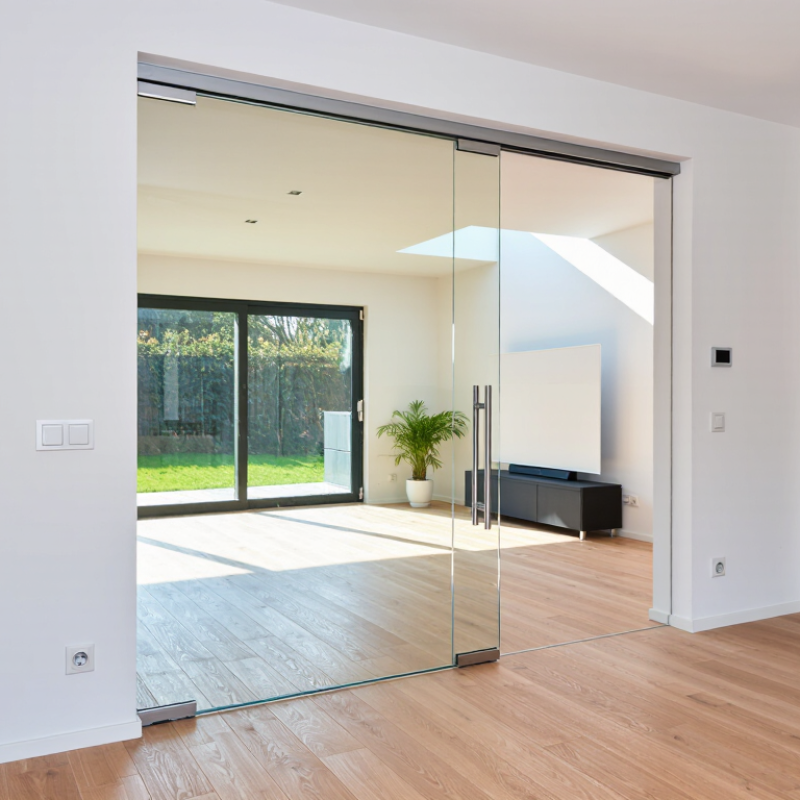
Identify the Room’s Needs and the Door’s Main Purpose
Before choosing a transparent sliding door, decide what the room needs from it. Is the goal to bring daylight into a dim hallway, connect a kitchen to a dining area, or separate a home office without blocking the view? Each purpose changes the priorities. A door beside a busy kitchen may need easy-clean glass and a track that handles frequent use. For a bedroom, privacy may matter more than an uninterrupted view.
Measure the opening and note nearby furniture, handles, and walking paths. A sliding panel saves swing space, but it still needs clear wall area to move along. Measure twice. Also consider sound and temperature: clear glass alone does not provide much separation, and seals and glazing affect performance. Think about sound. If privacy is important, explore frosted sections or curtains, and check how much light each option leaves in the room. When researching a China Transparent Sliding Door, compare dimensions, glass specifications, track details, and installation guidance rather than relying on appearance alone. A polished product photo can hide practical limits. I have learned that the intended use is easy to underestimate; a door chosen mainly for its look may feel inconvenient after daily use.
Choose a Glass Type for Light, Privacy, and Visibility
Glass choice determines how a sliding door handles daylight, privacy, and views. Clear glass keeps a room bright and preserves sightlines to a garden or patio. It also reveals indoor activity, especially at night when lamps are on. Check the view from outside after dark, not just during a sunny afternoon.
Frosted or patterned glass softens views while still admitting daylight. It works well beside a bathroom or in a home close to a walkway. Privacy varies with the pattern and lighting; nearby figures may still appear as shadows. Hold a sample at the door opening and look through it from several angles. Small samples can mislead.
Tinted glass reduces glare, but it may make a shaded room feel dim. Reflective finishes can offer daytime privacy, yet the effect may reverse after sunset. Safety matters, too. Sliding doors are large panels that can be struck or stressed during use, so ask a qualified installer which safety glazing suits the opening and local requirements. Tempered and laminated glass behave differently when damaged; neither choice removes every risk. I once assumed darker glass would feel calmer, but it also dulled the view. Consider how you actually use the room, including cloudy mornings and evening lighting.
7 Tips for Choosing a Transparent Sliding Door - Choose a Glass Type for Light, Privacy, and Visibility
| Glass choice | Light and visibility | Privacy | Best suited to | Selection tip |
| 1. Clear glass | High daylight transmission and an unobstructed view. | Low; people can generally see through it from either side. | Living areas, patios, and spaces where maintaining a view is important. | Choose it when visibility is the priority; add curtains, blinds, or exterior screening if privacy is needed. |
| 2. Frosted glass | Allows daylight through while diffusing it; clear views are obscured. | Good for blocking detailed views, though silhouettes may remain visible depending on lighting and distance. | Bathrooms, bedrooms, and interior partitions. | Check a full-size sample in the intended lighting, since frosting levels and silhouette visibility vary. |
| 3. Patterned or textured glass | Usually admits daylight; the pattern distorts or softens the view. | Varies with the pattern, texture, and viewing angle. | Rooms needing decorative screening without a fully opaque appearance. | Look through a sample from both sides to judge how much detail the pattern actually conceals. |
| 4. Tinted glass | Reduces visible light and glare; the view remains possible but may appear darker or colored. | Limited by itself; tint does not reliably prevent views, especially when the interior is brighter. | Bright spaces where reducing glare or solar heat gain is a consideration. | Compare visible-light transmission and solar-performance specifications; tint alone is not a privacy solution. |
| 5. Reflective-coated glass | Admits daylight while adding a reflective appearance; the view depends on the coating and lighting. | Can provide a one-way mirror effect only when the outside is brighter than the inside; the effect can reverse at night. | Exterior-facing doors where daytime screening is desired. | Plan for blinds or curtains after dark, and verify the coating’s appearance from both sides. |
| 6. Laminated glass with a privacy interlayer | Light transmission and clarity depend on the interlayer; opaque or decorative interlayers obscure the view. | Can range from partial to substantial privacy, depending on the interlayer design. | Doors where a specified privacy appearance or added safety performance is desired. | Confirm the interlayer type, appearance, and safety-glazing requirements for the door’s location. |
| 7. Switchable privacy glass | Typically changes between a clearer state and a diffuse, privacy state; performance varies by product. | Privacy can be changed on demand, but the opaque state may still transmit light and is not necessarily blackout. | Flexible-use rooms, meeting spaces, and interiors where adjustable screening is useful. | Check power requirements, controls, switching behavior, and the product’s privacy level in both states. |
Note: Light transmission, view clarity, and privacy vary by product and installation. Privacy also depends on lighting on each side of the door; review samples and manufacturer specifications before choosing.
Compare Frame Materials and Their Durability
7 Tips for Choosing a Transparent Sliding Door
Compare Frame Materials and Their Durability
Frame material affects maintenance, weather resistance, and comfort near the glass. Aluminum is slim and strong, but the U.S. Department of Energy notes that it conducts heat readily. A thermal break helps limit that transfer. Vinyl frames resist moisture and need little upkeep, though quality and reinforcement vary. Wood offers warmth, but exposed finishes need regular inspection. Small details matter: check corners, drainage slots, and seals for gaps or rough edges.
Tips: Ask what coating protects an aluminum frame. AAMA 2605-22 specifies a 10-year South Florida outdoor weathering test for high-performance coatings. That test measures coating performance; it is not a promise that every door lasts ten years. For any material, ask for the tested finish specification and written care instructions.
Compare certified whole-door ratings, not material claims alone. The National Fenestration Rating Council (NFRC) provides U-factor ratings, which indicate heat transfer; lower values mean less heat loss. Ratings do not measure frame lifespan, so inspect warranty terms and hardware separately. Vinyl can warp in strong heat if poorly designed, while wood can deteriorate where water sits. I would not choose by appearance alone. A showroom sample may hide the frame’s weakest point.
7 Tips for Choosing a Transparent Sliding Door: Compare Frame Materials and Their Durability
Typical estimated service life varies by material. Use these broad ranges as a comparison—not a guarantee; climate, installation quality, maintenance, and usage all affect durability.
Quick guide: Compare expected lifespan with upkeep needs and local weather exposure. Wood may need regular sealing or painting, while metal frames should be assessed for corrosion protection and thermal breaks.
Measure the Opening and Check the Available Space
A transparent sliding door needs more than a rough estimate of the opening. Measure the width at the top, middle, and bottom, then use the smallest reading. Check the height on both sides, too. Write each number down. Walls and floors are rarely perfectly square, even in newer homes. A few millimeters can affect how the panels meet or glide.
Check the full path of the moving panel before choosing a door. Measure the wall space beside the opening, including room for the panel to slide fully clear. Look for light switches, handles, nearby corners, and furniture that could block it. Check the ceiling height for the track and any fittings. This part can feel fussy, but skipping it is an expensive guess.
Also measure the frame, trim, and floor, not just the visible glass area. A thick baseboard or uneven threshold may change the fitting requirements. If the floor slopes, note the difference from one side to the other. Compare your measurements with the door’s installation guide, since systems need different clearances and overlap. Leave room for adjustment where the guide allows it. It is tempting to assume a standard opening is truly standard; that assumption deserves a second look.
Select a Sliding Mechanism That Moves Smoothly
A transparent sliding door should move with steady, quiet resistance—not jump when pushed or scrape near the end of its track. Check whether the rollers suit the glass panel’s weight, then slide the door through its full travel several times. Feel the difference. A slight rattle can point to loose hardware; a sudden drag may signal a misaligned track or rollers under strain. I wouldn’t judge a mechanism by one smooth showroom demonstration.
The U.S. Access Board’s 2010 ADA Standards, section 404.2.9, set a 5-pound maximum opening force for sliding and folding doors where the standard applies. Use that figure as an accessibility benchmark, not a substitute for checking the door in its actual installation.
Test it after fitting, with seals and handles in place. No scraping. If you’re sourcing a Wholesale Transparent Sliding Door, ask for documented load ratings and cycle-test results for the complete hardware set, not just the rollers. Also check that the track can be cleaned and adjusted without removing the glass; dust in the channel can quietly turn an easy glide into a daily annoyance.
Review Safety, Insulation, and Security Features
A transparent sliding door should feel stable, not merely look sleek. Check the glass specification and its safety markings; tempered glass breaks into smaller pieces, while laminated glass can hold fragments together. Ask how the panel is secured in its track, too. A smooth glide is not proof of a secure fit.
Insulation deserves equal scrutiny. The U.S. Department of Energy estimates that windows account for about 25–30% of household heating and cooling energy use. That figure is not specific to sliding doors, but it highlights the impact of large glazed openings. Compare National Fenestration Rating Council (NFRC) certified U-factor and solar heat gain coefficient (SHGC) ratings. Lower U-factor generally means less heat transfer; the right SHGC depends on climate and sun exposure. Pane count alone can mislead. Small flaws matter.
For a Transparent Spiral Door, assess the complete assembly: glass, frame, track, and lock. Ask whether the sliding-door assembly has been tested for forced-entry resistance using ASTM F842, where applicable. Add anti-lift features if the panel can be raised from its track, and test the lock with the door fully closed. Check the whole assembly. A strong lock on a flexible frame may still leave a weak point. NFRC ratings also do not measure security, so treat energy performance and forced-entry testing as separate checks.
Plan for Installation and Routine Maintenance
Before ordering, measure the opening at the top, middle, and floor. Record the narrowest width and check whether the floor is level. Measure twice. A small slope can make a sliding panel drift or leave an uneven gap. Confirm wall structure, track clearance, handle projection, and delivery access with the installer. For a Transparent Sectional Door, verify the opening system and hardware separately; its installation needs may differ from a conventional sliding door.
Ask for the panel weight, glass specification, track capacity, and recommended service interval in writing. The U.S. Department of Energy’s Energy Saver guidance estimates that windows account for 25–30% of residential heating and cooling energy use. That figure applies to windows, not doors, so it should not be treated as a door-performance promise. Still, it shows why fit and sealing details deserve attention. Have the installer check the perimeter seals and confirm that the frame suits the site.
Plan simple upkeep before installation. Keep the track free of grit, wipe it with a soft cloth, and use only lubricant approved for the hardware. Check rollers, handles, seals, and fasteners every few months; arrange professional service if movement becomes rough or the panel rattles. Glass needs gentle cleaning, not abrasive pads. Even a careful plan can miss one detail: who will notice wear first? The answer should be clear to everyone using the door.
A Smarter Way to Secure and Insulate Your Space with the L300 Insulated Sectional Door
The L300 insulated Sectional Door offers a practical way to improve security and temperature control in logistics warehouses and industrial facilities. Its rigid, double-layer steel panels are filled with high-density polyurethane foam, combining a sturdy barrier with dependable thermal insulation. This construction helps limit heat transfer and maintain more consistent indoor conditions, making the door well suited to temperature-controlled storage areas and spaces exposed to changing weather.
Built to handle demanding daily operations, the solid panels provide strong wind resistance and excellent impact performance. Tight sealing helps reduce drafts and unwanted air exchange, while the durable design supports a long service life in busy industrial environments. The door is also compatible with loading bay support systems, allowing it to integrate into dock operations and help facilities manage access more efficiently. From harsh outdoor conditions to frequent warehouse traffic, the L300 provides a secure, insulated entry solution tailored to the needs of industrial spaces.
FAQS
Decide whether daylight, room separation, or privacy matters most. A dim hallway may benefit from clear glass, while a bedroom may need frosted sections or curtains.
Measure the opening, nearby furniture, handles, and walking paths. The panel also needs clear wall space beside the opening. Measure twice.
It should move steadily without scraping, jumping, or rattling. Test it several times across the full track, not just once.
Dust, misaligned tracks, loose hardware, or rollers under strain can affect movement. A track that is easy to clean and adjust helps.
Review the glass specification and safety markings. Tempered glass breaks into smaller pieces; laminated glass can hold fragments together.
Compare U-factor and solar heat gain ratings for the complete door. Lower U-factor generally reduces heat transfer, while suitable solar gain depends on climate and sunlight.
No. Check the frame, track, lock, and panel together. A strong lock may still leave a weak point if the frame flexes.
Test the fitted door with its seals and handles in place. A five-pound opening-force benchmark applies in some accessibility contexts, but real-world testing matters too. I might have underestimated that.
Conclusion
Choosing a Transparent Sliding Door starts with understanding the room and what the door needs to do, whether that means bringing in daylight, connecting spaces, or offering a little more privacy. Consider how different glass types affect visibility and light, then compare frame materials for strength, durability, and suitability for the surrounding decor. Accurate measurements are essential: check the opening, the wall area beside it, and the clearance needed for the door to slide without obstruction.
A smooth, reliable mechanism makes everyday use easier, while safety features, insulation, and secure closing help the door work well in the long term. Before making a final choice, think through installation requirements and the effort needed for routine cleaning and maintenance. Balancing appearance with practical needs can help you select a door that fits the space, functions comfortably, and remains easy to care for over time.